Address
Pink City Shopping Center, 3rd Floor, Gulshan Ave, Dhaka 1212
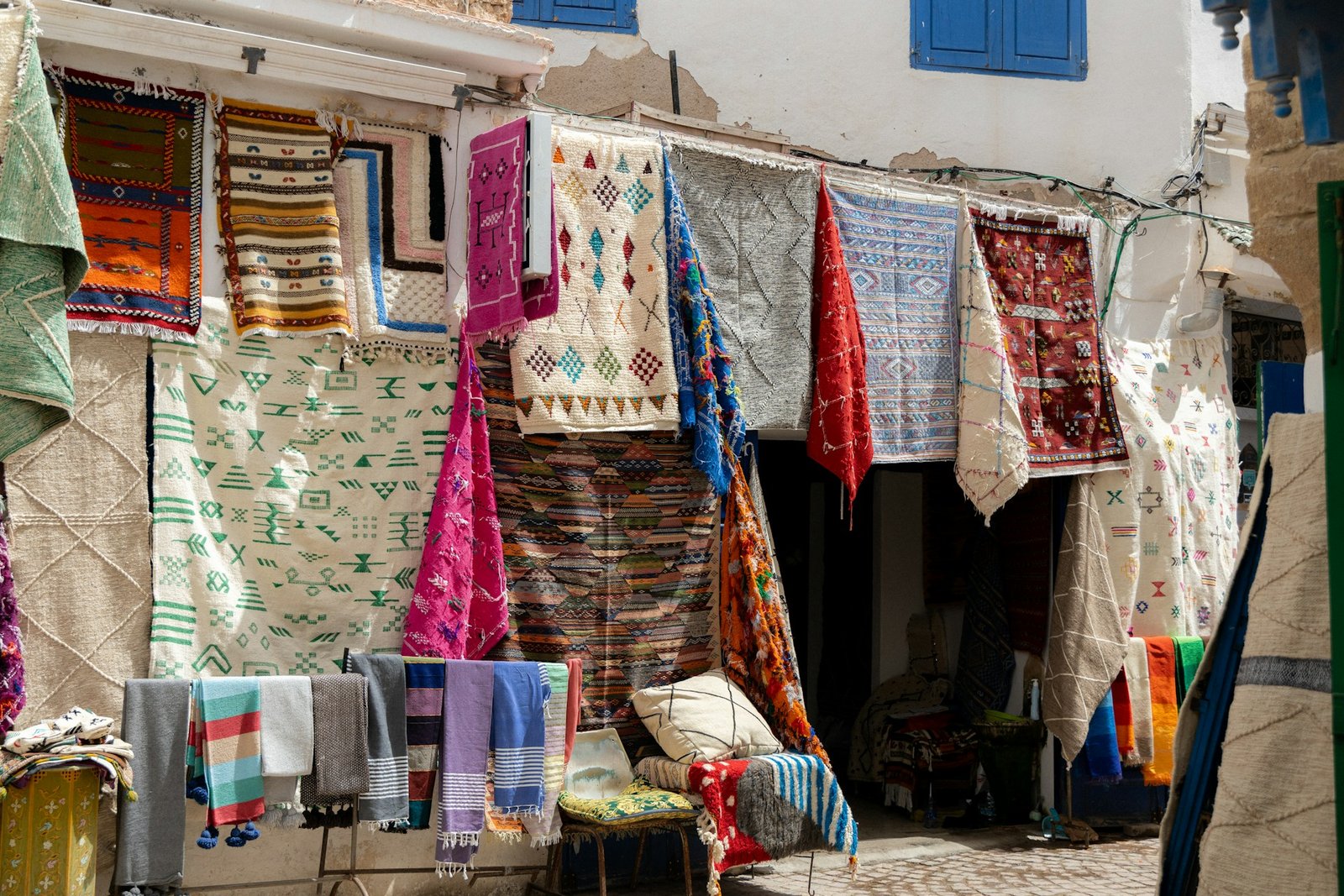
The story, the craft, and why a handmade shotoronji rug is nothing like a mass-produced one.
Long before “handmade” became a marketing word, weavers in the Rangpur region of Bangladesh were already turning cotton, jute and wool into rugs that doubled as blankets, prayer mats and family heirlooms. That craft is called shotoronji — also written shataranji or shatranji — and it is one of the few textile traditions in South Asia that has survived colonial trade, a national partition, and decades of cheap machine-made competition, and is still made almost exactly the way it always was: by hand, on a loom, one row at a time.
Shotoronji is both the name of a weaving technique and the name of the flat-woven carpet it produces. Unlike a knotted or tufted rug, a shotoronji rug is woven flat, which makes it lighter, fully reversible and easier to fold, air out or move between rooms. The pieces are known for bold geometric and floral motifs woven directly into the fabric — not printed on top — in vivid reds, blues, greens and yellows that have become the visual signature of the craft.
Because a shotoronji rug takes real skill and time to weave, it was historically an expensive item to own — for generations, having one in the home was considered a marker of status. During British colonial rule, the trade expanded well beyond Bengal, with shataranji carpets exported across the region to Sri Lanka, Burma, Indonesia, Thailand and Malaysia.
After the Partition of India in 1947, demand collapsed and the craft nearly disappeared, kept alive by a shrinking number of artisan families in Rangpur. It’s only in the past few decades — as global interest in handloom textiles and slow-made goods has grown — that shotoronji weaving has found new demand again, both inside Bangladesh and internationally.
A shotoronji rug carries two things a machine can never copy: the hands that wove it, and the region it was woven in.
Every shotoronji rug is made on a hand loom — no mechanized weaving is involved at any stage. Artisans traditionally work with jute, cotton, chenille (velvet-like) yarn and wool, dyed using a mix of natural and modern dyes to achieve the craft’s characteristic saturated colors. The geometric and floral patterns are built into the weave itself, row by row, which is why no two rugs — even from the same design — ever come out perfectly identical. That’s not a flaw; it’s the signature of something a person made, not a machine.
Shop ready-made shotoronji rugs, or work with our weavers to design a custom size, color and pattern for your space.
Shop the collection Design your custom rug
